Since I sat around most of my day waiting to hear from realtors, I didn't make much progress on the new dress plan, so, here's more of the backlog documentation.
Jewelry is an interesting thing in 16th Century Italy. Portraits demonstrate that women decked themselves out with girdle belts, necklaces, hair ornaments, brooches and other items, but the reality is that jewels were heavily regulated. Also of note is the fact that fake or paste jewels were forbidden. This is perhaps why the virtuous woman in my allegorical portrait has only the one large jewel that she really isn’t wearing and nothing else.
I on the other hand, love bling. Looking at other, similar portraits, I’ve decided to add a girdle belt, earrings, and hair ornaments. Large drop pearls are the most common type of earring. Girdle belts of this time period seem to be shorter than they become later and don’t have long drops as often. They follow the line of the bodice. Gold is a very common color. Jeweled hair ornaments also find their way into the decoration of ladies as well.
I assembled a variety of beads and findings I had in stash, adding some blue to match my dress.
The earrings are the same leverback findings I've been using with drop pearls and a small blue bead. I'm really happy with the little floral wreaths. I had been collecting a certain toggle clasp that was made of them and a hummingbird in order to have the hummingbirds for a different project for a lady with hummingbirds in her heraldry. I had begun to despair of using the wreaths. I think they're great in a girdle. The bits that are quadrafoils of hearts I bought bags and bags of at the bead faire back in June to attach to my armor. The other gold beads had been an impulse buy on clearance. I'm always amazed at what I can put together with "junk."
In wearing it, my only issue seems to be how tightly the headpins are twisted closed. I had several pop open because of the weight of the zibellino. I also gained a bit of weight from the time I assembled the girdle to when I wore it (as much as I'd like to say I just measured differently, the truth is holiday padding.) I needed about an inch more slack and so the wires had more pressure added than was good for them. Easily fixed with another link, but I didn't have pliers on me and didn't think to just dissassemble one of the four hair ornaments. Easily fixed and its all back together now. Hopefully I'll take off that holiday padding and can take the extra link out soon.
Showing posts with label Artemisian Costuming Challenge. Show all posts
Tuesday, January 17, 2012
Saturday, January 14, 2012
Petticoat
Long day- we've been looking at new places to live and my brain is fried. So, here's more of the ACC bits from my documentation folder:
My new petticoat is quite a bit shorter than the first. The gold tended to droop considerably in front from where I started it in the morning and eventually peeked out from under the dress, and I found myself tripping over it. By making the salmon colored linen one shorter (about ankle length) I hoped to fix that problem. I also cut an exaggerated concave curve in the front panel to allow for front drooping due to my body shape. The first petticoat also had pleats padded with wool felt. I chose not to do that with the linen underskirt. The cartridge pleats were much smaller, and the overall hem diameter was considerably smaller than the gold. I did cord both petticoats and very much like this. Italian skirts of the period usually have a padded hem, as evidenced by extant pieces. In the case of the extant pieces, they are padded with a strip of wool felt. In my case, I sewed channels around the skirt and inserted cotton rope for stiffening. The technique is used in other places, but is not documented in Italy at this time. The stiffened hem works wonderfully for supporting skirts and giving them a bit of shape as well as keeping them from tangling closely around the feet.
My gold petticoat was entirely hand sewn and the experience of doing so convinced me that I didn’t really want to do that again with seams that weren’t going to be seen. I machine sewed all the long seams. As the linen petticoat is fully lined and has no exposed seams, I think this was a reasonable choice. It is lined with the same brown linen I used for my first petticoat. I sewed the cording channels by hand, and added a small decorative trim of multiple rows of green ribbon. The cartridge pleats are stitched by hand. Rather than doing handsewn eyelets as I did on the first one, I applied small metal grommets.
After finishing the linen petticoat and trying it on with my dress, I came to the conclusion that it was too short and not full enough to support the silk dress. I therefore swapped it with the gold. The linen petticoat actually works very well with my original red dress because it is shorter and less full. It turns out that the changes I made do work better with the red dress with its stiffer , more narrow velvet skirt but the gold petticoat is needed to support the fuller silk skirt because the fabric has less body.
Friday, January 13, 2012
Apron
Antea by Parmaganino Portrait of the Artist’s Sister-in-Law by Bernadino Licinio
Beautifully embellished linen aprons show up in a variety of portraits in 16th century Italy. We also have several extant pieces. One is voided work in red silk on white linen. One of my favorites is cutwork on white linen. One is gold and blue embroidery, and many have lace insertions. There is also an additional one with lace in the Met that is not firmly dated. The variety of embellishments and styles is rather exceptional for such a simple piece of clothing.
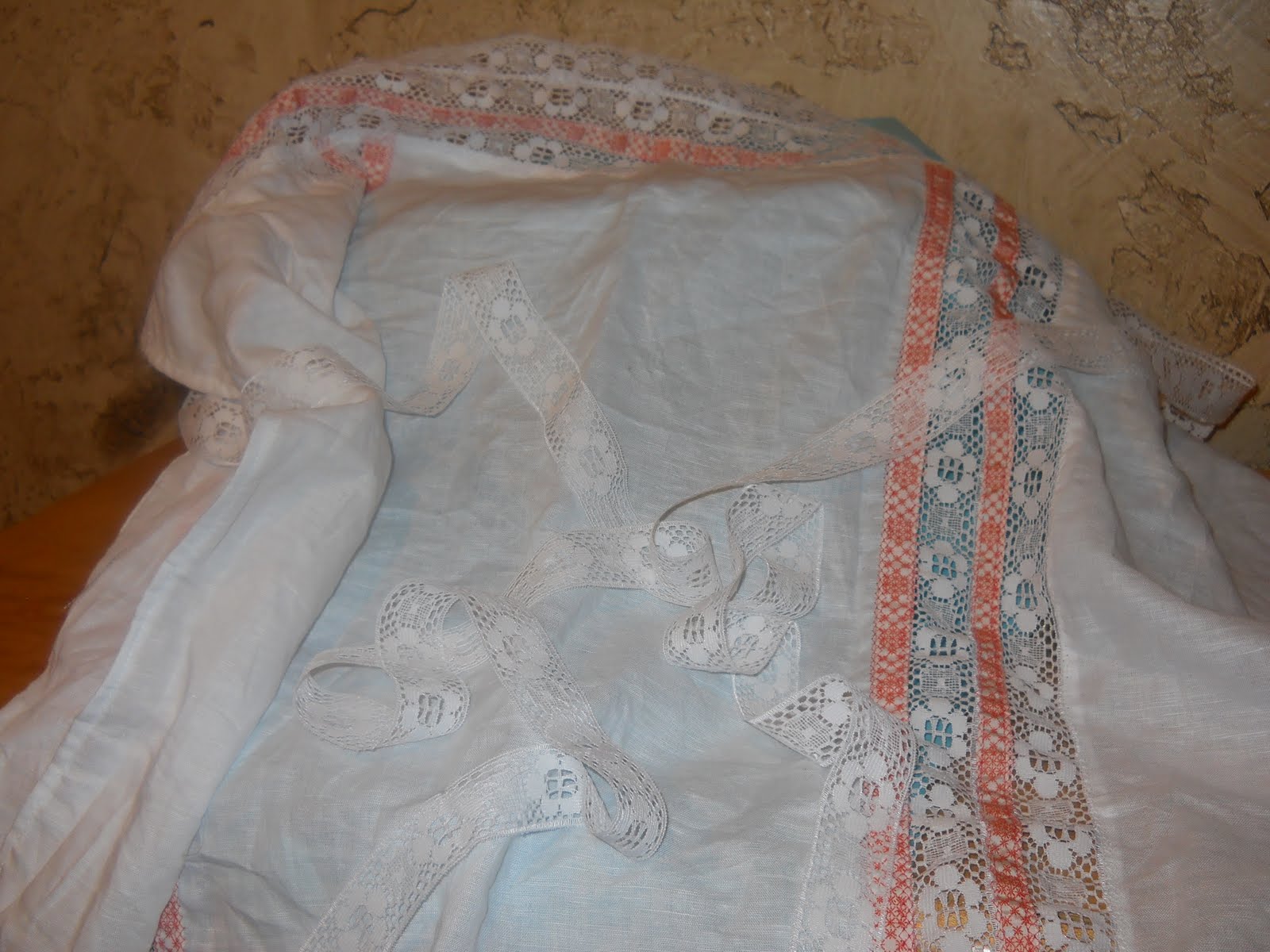
The first apron I made was white linen with extensive lace inserts hand sewn and I have really enjoyed wearing it. I was a little concerned that my original apron might be too wide to be correct for the period, however. While the extant aprons don’t seem to be particularly narrow, many of the portraits do show a very narrow apron. To differentiate from my first attempt I both went with a very narrow width, and added some color. I also chose not to handsew the second piece. I had a satin ribbon trim that had a cross stitch style design in orange and I thought it would go nicely with the colors of my dress. I placed it between strips of lace and then edged linen with it using the insertion stitch on my sewing machine.
Wednesday, January 11, 2012
Pretty pretties! Now, what do I do with them?
You know that great picture of my back in the last post? That is a picture of when Her Majesty Clare was handing out these GORGEOUS pewter tokens made by the Laurel she is apprenticed to, Mistress Gilliana Attewatyr. She made one for each of the participants. Badges for our own little pilgrimage of sorts.
The little scissor charm I found tucked into my notebook of documentation and I heard they were given out by Mistress Rebecca. Such a sweet charm.
So, now I'm staring at them and trying to figure out how best to display them. What sort of thing do they need to become?
I'm vaguely toying with the idea of putting the badge on a needlebook to tuck in with my other sewing tools. I could certainly make it into a scissor fob. There's also the option of stitching it to my pilgrim hat where I have been collecting my other pewter bits from site tokens and such, but I rarely wear it. Not that it isn't a fun hat, but it doesn't go so well with either of my sets of garb. my daughter suggested I make a felt band and attach it around my basket to show things off. her primary motivation is that she wants the hat. Its an unblocked felt one and she's sure it should be a cowgirl hat. I know a needlebook would get use, and lots of it. Just wondering if the badge deserves something cooler, and what exactly that would be. Whatever it is, I think the scissors will end up dangling from it so I can utilize the pretty braid its attached to.
As Poohbear would say, "Think. Think. Think."
The little scissor charm I found tucked into my notebook of documentation and I heard they were given out by Mistress Rebecca. Such a sweet charm.
So, now I'm staring at them and trying to figure out how best to display them. What sort of thing do they need to become?
I'm vaguely toying with the idea of putting the badge on a needlebook to tuck in with my other sewing tools. I could certainly make it into a scissor fob. There's also the option of stitching it to my pilgrim hat where I have been collecting my other pewter bits from site tokens and such, but I rarely wear it. Not that it isn't a fun hat, but it doesn't go so well with either of my sets of garb. my daughter suggested I make a felt band and attach it around my basket to show things off. her primary motivation is that she wants the hat. Its an unblocked felt one and she's sure it should be a cowgirl hat. I know a needlebook would get use, and lots of it. Just wondering if the badge deserves something cooler, and what exactly that would be. Whatever it is, I think the scissors will end up dangling from it so I can utilize the pretty braid its attached to.
As Poohbear would say, "Think. Think. Think."
Tuesday, January 10, 2012
Camicia
The cut of my camicia is based on an extant piece held in the Victoria and Albert Museum in the UK. I based my pattern off Dorothy Burnham's examination of it in her book Cut My Cote with additional information provided by Annabelle Wake in her article "How to Sew a Venetian Camicia" I also consulted Janet Arnold's Patterns of Fashion 4 where several Italian camicias are discussed. Because I am quite a bit taller and larger than women in 16th century Italy I chose to be much more generous with my widths of fabric, rather than following Ms. Wake or Ms. Burnaham's recommendations.
As my last camicia was a rather fancy one with a lot of lace inserts, I made this one very plain. It is also in keeping with the portrait I chose to base my ensemble on. The portrait has a plain camicia with integral pleated ruffle at the neck and cuffs. I followed the instructions at Realm of Venus for a gather pleated neckline, pleating and then backstitching over the pleats. In period fine linen would have been used. I also used a lightweight white linen fabric, but it is not of the fineness of linen in period as modern commercial linen does not approach the thread count of fabrics from the 16th century. Assembly was a combination of machine and hand work. I finished each panel and the gussets with machine hems, but did the insertion stitches to connect them by hand and hand pleated the neck and cuffs. After wearing it once I decided that the backstitch I did over the pleats to secure them needed extra reinforcement and did a decorative machine stitch over the top of the pleating.
Monday, January 9, 2012
Pincushion
Small pincushions made to dangle from sweetbags began to gain popularity in the late 16th and early 17th century. This is a tough object to document as it is part of an intended larger set. Eventually I plan to make a larger bag for holding sewing essentials, a knife sheath, needlecase and penner all embroidered in style and motif similar to the pincushion. For now, however, I have only the pincushion.
I decided to hang it from the saccocia/pocket as there is a fresco featuring a saccocia with attached cone shaped needlecase. By Alessandro Allori, “ A Woman at her Toilet,” is dated between 1575 and 1578 and resides in Florence, Italy in the Gaddi Chapel of the Church of Santa Maria Novella. The needlecase dangles from the bottom.
I made several unsuccessful attempts to make a similar needlecase but was not able to with the materials I had to hand. Having a similar needlework implement in the same place seemed to me like a reasonable substitution. I plan to keep scissors in the pocket itself and needles and pins accessible in the pincushion.
My pincushion is probably more English than Italian in design as the sweetbags are more particularly English. However, there is an extant Italian needlecase, probably from Venice, embroidered in a style very like the English knife sheathes that are often seen as part of sweetbag suites. The frequent use of Italian patterns and design for English embroidery and pattern books makes me feel pretty comfortable in planning a bag, pincushion and needlecase suite down the road, even if documenting the pincushion dangling from the saccoccia right now is a bit dodgy.
I had planned to design and stitch a heart and fleur and surround it with a floral design, but after drawing it up I quickly realized that embroidering something like that wasn’t going to happen right now. Instead, I found a floral design that was machine embroidered and appliqued it in the period manner. Again, my research is more English than Italian, but embroidered floral slips were often done on linen and then cut and appliqued on to other fabrics. The method of applique involved stiffening or sealing the edges of a piece cut out from the fabric with either glue or a wheat paste, placing it on to the fabric to be appliqued to and couching gold threads around the slip. The edges were not folded under, but instead held down by the couched gold. I appliqued my floral slips in this same way.
The pincushion is made of silk left from my dress stuffed with wool. I couched gold cord around the edges , leaving a loop of it to hang the pincushion from and finished it with the same tassels I used for my tassel bag. Sweetbag tassels are usually a little different than this, being an unusual type. When and if I finish the suite, I intend to change the tassels.
Sunday, January 8, 2012
Pewter, silk, pearls, and tassels
Since no one had the time to read my documentation at 12th Night, I figured I'd just finish up posting the last few items I made to go with the patchwork dress.
A little drier than normal, but I'll try to throw in a few jokes to keep y'all on your toes.
First up, my poste (actually probably a sottoposte because its a lesser quality of silk) a silk scarf to be used as a belt.
As my dress is a transitional style from the 1530’s and the portrait does not have a waist ornament, there are a couple of possibilities as to what could be worn with it. To give myself some options, I decided to make a poste or silk belt sash. Poste were an extremely popular export item of the Venetian silk industry. They were worn by both men and woman throughout Italy and the general use scarves were exported throughout the continent. Originally fine scarves intended for a variety of uses, as the 16th century went on, they became more and more narrow. By the second quarter of the 16th century they were sometimes described as narrow as eight inches. They were decorated with velvet, tassels and other ornaments.
Although Bacchiacca’s painting, “The Preaching of Saint John the Baptist” is earlier than my dress, it provides a good look at a long poste with tassels. I have included several other paintings with silk sashes tied at the waist that have more in common with my dress (balzo, full upper sleeves etc.)
Bacchiacca’s The Preaching of Saint John the Baptist
Portrait of a Woman by Paolo Zacchia the Elder
Bacchiaca
In making my sash, I chose to use a scrap of bronze silk and blue cotton tassels made from crochet cotton. I added a blue decorative stitch on the edges using my sewing machine. To add further weight to the tassels, I topped them with pewter castings of my krin (heart with fleur) badge. The castings are my first attempt at pewter casting, made in a class HRM Clare and Mistress Giliana taught at Collegium. I carved the mold in class and we poured the castings at that time. I filed them at home and drilled some holes in order to attach them to the sash. For further decoration, I painted them copper and bronze with enamel paints and stitched through pearls that seat into the drilled holes.
References used:
The Silk Industry of Renaissance Venice by Luca Mola p. 168
Sugar and Gamurre’s article on poste.
Sunday, January 1, 2012
Nosegay with beaded heartsease
Nosegays, posy's or small bouquets are often seen in portraits. This portrait by Niccolo dell'Abbate is one of the closest correspondences to my preferred area. He was known to have painted in the Emilia-Romagna area. The sitter has a small balzo and zibellino and her dress style seems to close to my 1530's-40's. Other portraits of interest are this one by Santi di Tito of a young woman with a bouquet of fresh flowers and what seem to be faux flowers of beads and silk in her hair and Flora by Tinteretto with a lovely small nosegay tucked into her bodice.
Because of the time of year, fresh flowers and plants are not particularly available, so I tried to think ahead. I have been keeping culinary herbs, and as luck would have it, several of them are used for their small and symbolism in nosegays. Jadwiga Zajaczkowa mentions both rosemary and thyme in her article "Medieval herbs for the very small garden." Rosemary was part of marriage wreaths as well as being "put in tussy-mussy flower bunches to ward off vermine and noxious smells." Thyme is referenced as well (albeit from a rather suspect 1941 source) "it used to be the custom for maidens to wear a nosegay of sprigs of thyme, mint and lavender to bring them sweethearts."
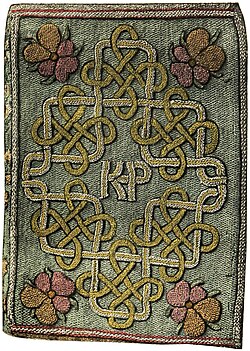
Shakespeare's Ophelia also makes mention of "Rosemary for remembrance" and "pansies for thoughts." Pansies (or heartsease as they are also called) also show up in blackwork patterns and are embroidered on several extant English coifs. They were a rather popular for embroidery, especially as Queen Elizabeth I used them as a badge. At age 11 she embroidered a book cover for Katherine Parr with pansies in each corner and a second book a bit later, also with heartsease.
Since I wasn't going to find those sorts of flowers in December, I decided to try something different. Faux flowers were very popular in the 15th and 16th century. Silk ones were very common, but beaded ones did exist. Particularly in Venice where they were made by poor women from cast offs from the glass making industry. Beaded flowers were a lower and middle class item most usually, as the upper classes could afford more expensive materials and had their faux flowers made from gold and jewels. I, however, do not have access to a lot of gold and jewels. I ran across Roxelana Bramante's research into beaded flowers (as well as incredible stuff on silk flowers)and have wanted to try making a few ever since. This seemed the opportunity.
As this was a first attempt and I was working with stash materials, I went with much larger beads. I used blue and gold glass beads to match my dress and a small amber carved leaf for the center piece. They are made using very basic French beaded flower techniques. They're just strung on wire and twisted into shape. Roxelana mentions that it would have been iron wire used in period. I used steel 22 gauge paddle wire. The resulting flower is very oversized comparared to the delicate pieces that would have been made by Venetian beadstringers for sale, but I am happy with it as a first attempt. I would like to make some further pieces out of smaller beads with more intricate patterns in the future.
To make the tiny nosegay, I clipped a few sprigs of rosemary and thyme and arranged them with the beaded heartsease. The fresh herbs are wrapped in a bit of damp cotton and the entire posy is wrapped in a scrap of silk and tied with ribbons. When I wear the dress, I do plan to do a larger nosegay and add a few more sprigs of the herbs but I didn't want to snip too much and hurt my herb plants.
Cost $0
Culinary herbs grown for my kitchen use with fabric, ribbon, wire, and beads from stash.
Categories:
Fief Holding:Gardening and horticulture
Glass:Other
Breakdown of budget
This is more house keeping, as I put together my documentation for 12th Night, but I needed somewhere to post info.
Budgetwise I was rather surprised. I totally ignored budget, intending to sacrifice some accessories upon the sacrificial altar and exchange their points for not having to worry about it. From the rules "If your expenses are over $100, you will be penalized 1 point for every $10 over $100." One extra accessory is worth 10 points, so following that out to its conclusion, if you make one extra accessory and are willing to not get any of its points that gives an additional $100. If you were to use an entirely new talent and get all 10 of those points you could get $200 (or more, depending on how many new talents used) from the accessory. So, for example, my shoes are Costuming:Footwear and therefore a new category. They have wet felted insoles and felt lining Textile Arts:Non-woven, are Leatherwork:functional, and have leather applique Leatherwork:Decorative. The applique is of my heraldic badge Heraldic Display: clothing. So, conceivably, the slippers could come out to 60 points on their own and give me an extra $600 to play with. Granted, that's probably silly and I wouldn't get the full points, but looking at it that way it seems totally worth it to make an interesting accessory and not worry about budget. It more than pays for itself.
I originally planned to just have "budget accessories" where I didn't bother to calculate the points and gave up the points to create a budget pool that I couldn't possibly spend. I got curious yesterday though and I calculated the budget just to see since I'd ended up using so much stash materials. My total was $107.67. So, I actually only have 1 penalty point.
Granted, as my husband points out, when I went shopping for the things I used in the dress I spent a lot more than that. For example there was the trip yesterday to JoAnn's for a hook and eye for the skirt. I did not in fact end up needing the hook and eye once the dress was laced so its not in the final budget tally. I did buy hook and eyes, however. They also had their clearance fabrics 50% off and there was this gorgeous gold cotton with the perfect Venetian pattern. I came home with a little over 11 yards at $4.50 a yard. And a quilted red for a petticoat to go with it. And some more sewing machine needles. And a new pair of scissors since my good ones got used for wrapping paper cutting. So the $0 cost to my dress budget wasn't actually $0. I spent $108. Gandhi feels that should be included in the budget. I, on the other hand, am pleased with my new stash fabrics that need to cure a bit in stash before being used.
If you are bored enough to read the budget breakdown, here it is.
Layers-
Skin layer- White linen camicia. Pieces all machine sewn and then assembled by hand with an insertion stitch. Hand pleated. Cost $0. Traded massage for 5 yards of white linen. Threads from stash. Pearl buttons from stash.
Main garment-Dress. Blue and orange patchworked silk. patchwork by machine and interior long seams are machine sewn. All pieces are hand finished and whipstiched together. Cost $39.47. 6 yards of blue silk purchased for $5 a yard. Plastic boning material purchased for $8. Buttonhole thread used for cartridge pleating purchased for $1.47. Orange silk from stash. Wool felt from stash. Grey twill used for lining, interlining, and boning layers from stash. Thread from stash. Sleeves and baragoni were not completed by deadline.
Warmth layer- Mantellina. Brown velvet lined in brown shearling with a decorative lining of copper dupioni silk. Entirely hand sewn. Cutwork, fur use, and pearl beading. Cost $0. Traded massage for shearling hide. Silk, pearls, threads, and velvet all from stash.
Accessory- Peacock feather fan. Wood handle constructed from purchased wooden table leg turning, pressed wood decorative filigree and wood putty. Pad of fan is made from leather. Peacock feathers are stitched and glued into place. Handle was painted, gilded and enhanced with metal filigree, pearls, paua shell, and blue beads. Cost $28.50 $20 for 100 peacock feathers, $5 for the table leg and $3.50 for the filigree wood pieces. Gold leaf, white paint, wood putty, leather, filigree, paua shell, and other beads from stash.
Additional garments and accessories
1.Gold coverciere/partlet Purchased fabric hand hemmed. Cost $4 for 1/2 yard of fabric. Thread from stash.
2.Salmon linen petticoat with chestnut linen lining. Corded with green ribbon accent. Hand sewn eyelets. Machine sewn and hemmed with hand cartridge pleating. Cost $0. All materials and threads from stash.
3.Blue linen drawers with embroidered cuffs trimmed in lace and buttons. Entirely machine sewn. Cost $0. Material, buttons trim, lace and threads from stash.
4.Particolor leather slippers. Blue and tan leather slippers with heart applique with hard interior leather sole. Lined in wool. Machine sewn. Cost $0 Leather and wool from stash
5.White linen stockings with lace cuffs. Cost $0 Lace from stash, linen remnants of traded length from camicia. Machine sewn with hand finishing.
6.Blackwork garters with buckles and tassels. Cost 20 cents Tangerine silk from IRCC prize. Buckles traded for massage. Aida bands purchased as a large lot from the thrift store for $2 (100 yards. I used 2 yards.)
7.Orange silk saccocia lined in navy blue linen trimmed in orange and metallic trim. Cost $0 materials and trim from stash
8.Rosary of gold beads with filigree dangle and bow finial. Strung on black silk. Cost $0. All materials from stash
9.Fur lined muff with pearl buttons.. Cost $7. Vintage chincilla stole from stash cut for fur. Purchased fabric for outer. Trim from stash. Pearls from stash. threads from stash
10.Tasseled bag with purse weight. Cost $7 purchased fabric. Purse weight from stash. Chain from stash. Tassels made from fringe for parasol. Lined with scrap silk.
11.Nosegay from flowers I grew/dried/ or made. Cost $0
12. Jewel sculpted from polymer clay and gilded. Cost $0 Sculpy from stash, gold leaf from stash, acrylic gems from stash, chain and clasp from stash.
13. Comb carved from wood painted and gilded. Cost $0 Wood scavenged. Painting supplies and gold leaf from stash.
14. Blue and gold girdle. Cost $0 Blue beads and gold plaques from stash.
15. White apron with orange accents. Cost $0 White linen scrap. Lace and trims from stash.
16.Pearl drop earrings. Cost $3. Leverbacks and blue beads from stash. Purchased glass teardrop pearl strand for $3
17. Pearl necklace. Cost $0 Freshwater pearls, wire, and clasp from stash.
18. Pearl girdle with tassel Cost $7 for purchased tassel. Wire, gold plaques and freshwater pearls from stash.
19. Paper and filigree flag fan. Cost $0. Wood handle, metal filigree bits, pearls, paint, and Bristol board from stash.
20.Chainmaille bracelets Cost $0 10mm jumprings and filigree clasps from stash.
21. Turban. Cost $0 Copper silk and cotton fringe from stash
22. Gold and blue hair ornament Cost $0 Wig clips, beads and plaques from stash
23. Ghirlandia Cost $0 Wool yarn curled over a wool base with copper tone ribbons.
24. Silk sash (poste) with cast pewter terminal decorations and tassels. Cost $0? I used the pewter castings I made of my heraldic badge at Collegium adding enamel paint. Copper silk hand hemmed from stash. Tassels made of cotton floss from stash.
25. Handkerchief. Cost $0. Scrap linen with purchased lace inserts.
26. Zibellino Cost $0. Materials purchased before start of contest. Fur with sculpted polymer clay head with filigree and bead accents.
27. Chopines Cost $0. Scrap wood from my father. Leather, trim, and upholstery nails purchased from project before contest started.
28. Street veil with tassels Cost $0 Black cotton gauze from stash. Tassels made from crochet cotton. Trim hand made of gold and black crochet cotton from stash.
29. Parasol with fringe Cost $6.50 Purchased umbrella frame for $5. Fringe purchased for $1.50 from thrift store. Other materials from stash
30. Blue leather gloves Cost $0 Traded massage for pigskin.
31. Zimarra Cost $0 Fabrics from stash. Buttons and trims made from crochet cotton in stash.
32. Walking sticks Cost $5 for dowels. Paint, beads, and other materials from stash
33. Blue and orange with gold pincushion. Cost $0 Materials in stash
34. Larva mask. Cost $0 Molded from buckram in stash, covered in stash fabric with ribbons and paint from stash.
35. Accordoletta. Silk fingerloop braids adapted for braiding on the marudai Cost $0 Silk threads from IRCC prize.
Total cost $107,67
Budgetwise I was rather surprised. I totally ignored budget, intending to sacrifice some accessories upon the sacrificial altar and exchange their points for not having to worry about it. From the rules "If your expenses are over $100, you will be penalized 1 point for every $10 over $100." One extra accessory is worth 10 points, so following that out to its conclusion, if you make one extra accessory and are willing to not get any of its points that gives an additional $100. If you were to use an entirely new talent and get all 10 of those points you could get $200 (or more, depending on how many new talents used) from the accessory. So, for example, my shoes are Costuming:Footwear and therefore a new category. They have wet felted insoles and felt lining Textile Arts:Non-woven, are Leatherwork:functional, and have leather applique Leatherwork:Decorative. The applique is of my heraldic badge Heraldic Display: clothing. So, conceivably, the slippers could come out to 60 points on their own and give me an extra $600 to play with. Granted, that's probably silly and I wouldn't get the full points, but looking at it that way it seems totally worth it to make an interesting accessory and not worry about budget. It more than pays for itself.
I originally planned to just have "budget accessories" where I didn't bother to calculate the points and gave up the points to create a budget pool that I couldn't possibly spend. I got curious yesterday though and I calculated the budget just to see since I'd ended up using so much stash materials. My total was $107.67. So, I actually only have 1 penalty point.
Granted, as my husband points out, when I went shopping for the things I used in the dress I spent a lot more than that. For example there was the trip yesterday to JoAnn's for a hook and eye for the skirt. I did not in fact end up needing the hook and eye once the dress was laced so its not in the final budget tally. I did buy hook and eyes, however. They also had their clearance fabrics 50% off and there was this gorgeous gold cotton with the perfect Venetian pattern. I came home with a little over 11 yards at $4.50 a yard. And a quilted red for a petticoat to go with it. And some more sewing machine needles. And a new pair of scissors since my good ones got used for wrapping paper cutting. So the $0 cost to my dress budget wasn't actually $0. I spent $108. Gandhi feels that should be included in the budget. I, on the other hand, am pleased with my new stash fabrics that need to cure a bit in stash before being used.
If you are bored enough to read the budget breakdown, here it is.
Layers-
Skin layer- White linen camicia. Pieces all machine sewn and then assembled by hand with an insertion stitch. Hand pleated. Cost $0. Traded massage for 5 yards of white linen. Threads from stash. Pearl buttons from stash.
Main garment-Dress. Blue and orange patchworked silk. patchwork by machine and interior long seams are machine sewn. All pieces are hand finished and whipstiched together. Cost $39.47. 6 yards of blue silk purchased for $5 a yard. Plastic boning material purchased for $8. Buttonhole thread used for cartridge pleating purchased for $1.47. Orange silk from stash. Wool felt from stash. Grey twill used for lining, interlining, and boning layers from stash. Thread from stash. Sleeves and baragoni were not completed by deadline.
Warmth layer- Mantellina. Brown velvet lined in brown shearling with a decorative lining of copper dupioni silk. Entirely hand sewn. Cutwork, fur use, and pearl beading. Cost $0. Traded massage for shearling hide. Silk, pearls, threads, and velvet all from stash.
Accessory- Peacock feather fan. Wood handle constructed from purchased wooden table leg turning, pressed wood decorative filigree and wood putty. Pad of fan is made from leather. Peacock feathers are stitched and glued into place. Handle was painted, gilded and enhanced with metal filigree, pearls, paua shell, and blue beads. Cost $28.50 $20 for 100 peacock feathers, $5 for the table leg and $3.50 for the filigree wood pieces. Gold leaf, white paint, wood putty, leather, filigree, paua shell, and other beads from stash.
Additional garments and accessories
1.Gold coverciere/partlet Purchased fabric hand hemmed. Cost $4 for 1/2 yard of fabric. Thread from stash.
2.Salmon linen petticoat with chestnut linen lining. Corded with green ribbon accent. Hand sewn eyelets. Machine sewn and hemmed with hand cartridge pleating. Cost $0. All materials and threads from stash.
3.Blue linen drawers with embroidered cuffs trimmed in lace and buttons. Entirely machine sewn. Cost $0. Material, buttons trim, lace and threads from stash.
4.Particolor leather slippers. Blue and tan leather slippers with heart applique with hard interior leather sole. Lined in wool. Machine sewn. Cost $0 Leather and wool from stash
5.White linen stockings with lace cuffs. Cost $0 Lace from stash, linen remnants of traded length from camicia. Machine sewn with hand finishing.
6.Blackwork garters with buckles and tassels. Cost 20 cents Tangerine silk from IRCC prize. Buckles traded for massage. Aida bands purchased as a large lot from the thrift store for $2 (100 yards. I used 2 yards.)
7.Orange silk saccocia lined in navy blue linen trimmed in orange and metallic trim. Cost $0 materials and trim from stash
8.Rosary of gold beads with filigree dangle and bow finial. Strung on black silk. Cost $0. All materials from stash
9.Fur lined muff with pearl buttons.. Cost $7. Vintage chincilla stole from stash cut for fur. Purchased fabric for outer. Trim from stash. Pearls from stash. threads from stash
10.Tasseled bag with purse weight. Cost $7 purchased fabric. Purse weight from stash. Chain from stash. Tassels made from fringe for parasol. Lined with scrap silk.
11.Nosegay from flowers I grew/dried/ or made. Cost $0
12. Jewel sculpted from polymer clay and gilded. Cost $0 Sculpy from stash, gold leaf from stash, acrylic gems from stash, chain and clasp from stash.
13. Comb carved from wood painted and gilded. Cost $0 Wood scavenged. Painting supplies and gold leaf from stash.
14. Blue and gold girdle. Cost $0 Blue beads and gold plaques from stash.
15. White apron with orange accents. Cost $0 White linen scrap. Lace and trims from stash.
16.Pearl drop earrings. Cost $3. Leverbacks and blue beads from stash. Purchased glass teardrop pearl strand for $3
17. Pearl necklace. Cost $0 Freshwater pearls, wire, and clasp from stash.
18. Pearl girdle with tassel Cost $7 for purchased tassel. Wire, gold plaques and freshwater pearls from stash.
19. Paper and filigree flag fan. Cost $0. Wood handle, metal filigree bits, pearls, paint, and Bristol board from stash.
20.Chainmaille bracelets Cost $0 10mm jumprings and filigree clasps from stash.
21. Turban. Cost $0 Copper silk and cotton fringe from stash
22. Gold and blue hair ornament Cost $0 Wig clips, beads and plaques from stash
23. Ghirlandia Cost $0 Wool yarn curled over a wool base with copper tone ribbons.
24. Silk sash (poste) with cast pewter terminal decorations and tassels. Cost $0? I used the pewter castings I made of my heraldic badge at Collegium adding enamel paint. Copper silk hand hemmed from stash. Tassels made of cotton floss from stash.
25. Handkerchief. Cost $0. Scrap linen with purchased lace inserts.
26. Zibellino Cost $0. Materials purchased before start of contest. Fur with sculpted polymer clay head with filigree and bead accents.
27. Chopines Cost $0. Scrap wood from my father. Leather, trim, and upholstery nails purchased from project before contest started.
28. Street veil with tassels Cost $0 Black cotton gauze from stash. Tassels made from crochet cotton. Trim hand made of gold and black crochet cotton from stash.
29. Parasol with fringe Cost $6.50 Purchased umbrella frame for $5. Fringe purchased for $1.50 from thrift store. Other materials from stash
30. Blue leather gloves Cost $0 Traded massage for pigskin.
31. Zimarra Cost $0 Fabrics from stash. Buttons and trims made from crochet cotton in stash.
32. Walking sticks Cost $5 for dowels. Paint, beads, and other materials from stash
33. Blue and orange with gold pincushion. Cost $0 Materials in stash
34. Larva mask. Cost $0 Molded from buckram in stash, covered in stash fabric with ribbons and paint from stash.
35. Accordoletta. Silk fingerloop braids adapted for braiding on the marudai Cost $0 Silk threads from IRCC prize.
Total cost $107,67
Saturday, December 31, 2011
Here's the dress
In need of steam, the real bodice cords and the sleeves still, but its officially a dress. The weird bulge I was worried about in the right shoulder strap isn't there once its laced on rather than just pulled close to check fit so WHOO_HOO!
Even with the lining and padding in the cartridge pleats the skirt doesn't seem as full as I'd hoped. I think I may wear it with my larger gold petticoat rather than the salmon one I made for it. That actually sort of works out well. I wore the salmon one with the red dress at Solstice Court and it made the red dress skirt hang much better. The salmon one is shorter and lighter weight and the red skirt is more narrow that the one on the new dress. There are more than 200 inches in the hem for the blue and orange and it is cartridge pleated so I think the gold one will support it better.
I need to put chapes on the kumihimo cord I made to lace the bodice closed and I'm calling it quits for tonight. Bianca announced on the AErie that we needed to bring documentation to 12th Night and if we were doing that full documentation by midnight was optional but encouraged. I'm going with optional and spending the holiday with my husband and kids rather than scrambling. We have lobster tails, shrimp, a couple of bottles of mead and a big ol' pile of board games.
Happy New Year!
Friday, December 30, 2011
I knew I'd forget something
34. Larva mask. My vizard/moretta isn't all that much fun to wear what with not being able to talk so I made a more wearable (and hopefully less creepy one.) It's plain and seems boring compared to what I think of when I think Venetian mask, but its more accurate to the research I can find.
35ish Not sure if this is really an accessory or not, but I braided a pair of silk bodice laces/accordoletta on my marudai.
Skirt is now on the bodice and I have a dress. It remains sleeveless, however. I did something funky to the muscles in my right forearm pushing the awl through the heavy layers in order to finish the eyelets for the front lacing. There are 26 of them and the bodice is 4 layers of twill (lining, flat lining and 2 for the boning layer,) 2 of wool felt, and the silk layer making it a bear to push an awl through. Add to that sewing several hundred cartridge pleats (silk, wool padding and twill lining) to the aforementioned 7 layer bodice and I'm just not up to any more hand sewing tomorrow. I guess I'll have to be sleeveless for contest end. I'm sure I can get them done before 12th Night but it just isn't happening in the next 12 hours in order to be officially counted.
I promise pictures (if crummy ones) in the afternoon tomorrow. Davey has confirmed that he'll be coming over to take nicer ones on Thursday to put in my documentation for 12th Night so y'all can see how these things really look as opposed to my terrible photos.
35ish Not sure if this is really an accessory or not, but I braided a pair of silk bodice laces/accordoletta on my marudai.
Skirt is now on the bodice and I have a dress. It remains sleeveless, however. I did something funky to the muscles in my right forearm pushing the awl through the heavy layers in order to finish the eyelets for the front lacing. There are 26 of them and the bodice is 4 layers of twill (lining, flat lining and 2 for the boning layer,) 2 of wool felt, and the silk layer making it a bear to push an awl through. Add to that sewing several hundred cartridge pleats (silk, wool padding and twill lining) to the aforementioned 7 layer bodice and I'm just not up to any more hand sewing tomorrow. I guess I'll have to be sleeveless for contest end. I'm sure I can get them done before 12th Night but it just isn't happening in the next 12 hours in order to be officially counted.
I promise pictures (if crummy ones) in the afternoon tomorrow. Davey has confirmed that he'll be coming over to take nicer ones on Thursday to put in my documentation for 12th Night so y'all can see how these things really look as opposed to my terrible photos.
Thursday, December 29, 2011
I know, I know, I haven't updated
I've been trying to balance sick kids, scrambling to finish and the holidays. I swear, I'll have pictures and updates soon. The dress is getting close. The bodice is done and I'm just putting the skirt on now. I already had it lined and pleated, so its just a matter of lots and lots of tacking to the bodice. We're taking the kids to their grandma's tomorrow so I hope to finish it in the car. Baragoni are cut and pieced, but I need to bombast them. Still need to cut and piece the sleeves. Its going to be really, really close as to whether the lower sleeves get done by the New Year's Eve deadline. I'm pretty sure I'll have the baragoni done, though.
I was looking at my list of stuff and realizing that I haven't blogged a lot of finished projects so there may be some quick pictures of piles of things to prove they're done and more leisurely posts after the deadline to actually show them off and talk about them. I think all my time is pretty much committed to dress finishing, so this is the list of my completed items unless something unforeseen happens and I find a time portal that lets me get an extra month to work.
Layers-
Skin layer- Camicia. I finished the plain pleated one so don't need to substitute my lace inserted one, yay!
Main garment-Dress. Should technically be a "dress" by late tonight, some time after dinner. Obviously, I want to complete the sleeves as well, but they'll be getting done at the last minute despite my better intentions.
Warmth layer- Mantellina. Complete in all its handsewn, furlined, cutwork, pearled glory.
Accessory- Peacock feather fan. I think my giant fan of awesome is going to be my official layer 4. I couldn't be more pleased with the luxurious fantastic over-the-topness of it.
Additional garments and accessories
1.Gold coverciere/partlet (needs to be blogged)
2.Salmon linen petticoat (ntbb)
3.Blue linen drawers
4.Particolor leather slippers
5.White linen stockings
6.Blackwork garters with buckles and tassels
7.Orange silk saccocia
8.Rosary
9.Fur lined muff
10.Tasseled bag
11.Nosegay (Needs to be blogged-- I even grew stuff!)
12. Sculpted jewel necklace
13. Peacock comb
14. Blue and gold girdle (ntbb)
15. White apron with orange accents (ntbb)
16.Pearl drop earrings
17. Pearl necklace
18. Pearl girdle with tassel
19. Paper and filigree flag fan
20.Chainmaille bracelets (ntbb)
21. Turban
22. Gold and blue hair ornament (ntbb)
23. Crazy curly hat (I made a lot of changes due to some new research so ntbb)
24. Silk sash with cast terminal decorations (ntbb)
25. Handkerchief (currently using my IRCC one since my drawnwork one is incomplete)
26. Zibellino (Using Galanthis since she's pretty awesome and I see no reason to make a new zibi- she was made within the contest parameters)
27. Chopines (using my original pair-- see above for reasoning. Also, I didn't get the pantofles I started done.)
28. Street veil with tassels (Again, using the IRCC one because I love it and it was made within the parameters of the contest.)
29. Parasol with fringe (ntbb)
30. Blue leather gloves (ntbb)
31. Zimarra (I'm REALLY close on the blue and gold. It might not get done by the deadline, in which case I will wear my other one, which is within contest parameters. I hope I can finish the blue to wear to 12th Night even if it doesn't make the sewing deadline though.)
32. Walking sticks (so I don't fall on my head wearing the chopines since I lack servant boys. Found a little research, but its lighter than I'd like. The sticks are fun though. Needs to be blogged.)
33. Blue and orange with gold pincushion. (ntbb)
Stuff I didn't get done and am grumbly about:
Pantofles-- Slide on wedgie sort of sandals to wear with my slippers rather than the crazier chopines. They're cut and mostly shaped but need finish work and to be covered. Guess its something to do in the spring.
Book-- Book of sonnets bound in cuir cisele (water tooled)leather. It was supposed to be just a quicky project for Realm of Venus Idle hands in October but very much mushroomed. I have 4 sonnets written and 2 illuminated. This is going to be a long term on going project.
Drawn thread linen handkerchief-- I have a basic braided border done but the hankie isn't anywhere near completion. It needs a good solid week of work minimum.
Needlecase-- I still haven't figured this out. I've tried a couple of other things since my early experiments but haven't figured out how to make it really work. I did make a little pincushion to hang from the saccocia, but would rather have finished the needlecase and maybe done something more like April/Aurora's gorgeous sewing kit
Pearled reta/caul-- I got the cords stretched on a frame, but didn't have time to stitch the pearls. A day or two would finish it.
Lightweight dyed silk veil-- Just never got around to ordering the silk so this one is more just an idea. I'd like to have one though. I think I'll be ordering it in a week or so just so I have one.
I was looking at my list of stuff and realizing that I haven't blogged a lot of finished projects so there may be some quick pictures of piles of things to prove they're done and more leisurely posts after the deadline to actually show them off and talk about them. I think all my time is pretty much committed to dress finishing, so this is the list of my completed items unless something unforeseen happens and I find a time portal that lets me get an extra month to work.
Layers-
Skin layer- Camicia. I finished the plain pleated one so don't need to substitute my lace inserted one, yay!
Main garment-Dress. Should technically be a "dress" by late tonight, some time after dinner. Obviously, I want to complete the sleeves as well, but they'll be getting done at the last minute despite my better intentions.
Warmth layer- Mantellina. Complete in all its handsewn, furlined, cutwork, pearled glory.
Accessory- Peacock feather fan. I think my giant fan of awesome is going to be my official layer 4. I couldn't be more pleased with the luxurious fantastic over-the-topness of it.
Additional garments and accessories
1.Gold coverciere/partlet (needs to be blogged)
2.Salmon linen petticoat (ntbb)
3.Blue linen drawers
4.Particolor leather slippers
5.White linen stockings
6.Blackwork garters with buckles and tassels
7.Orange silk saccocia
8.Rosary
9.Fur lined muff
10.Tasseled bag
11.Nosegay (Needs to be blogged-- I even grew stuff!)
12. Sculpted jewel necklace
13. Peacock comb
14. Blue and gold girdle (ntbb)
15. White apron with orange accents (ntbb)
16.Pearl drop earrings
17. Pearl necklace
18. Pearl girdle with tassel
19. Paper and filigree flag fan
20.Chainmaille bracelets (ntbb)
21. Turban
22. Gold and blue hair ornament (ntbb)
23. Crazy curly hat (I made a lot of changes due to some new research so ntbb)
24. Silk sash with cast terminal decorations (ntbb)
25. Handkerchief (currently using my IRCC one since my drawnwork one is incomplete)
26. Zibellino (Using Galanthis since she's pretty awesome and I see no reason to make a new zibi- she was made within the contest parameters)
27. Chopines (using my original pair-- see above for reasoning. Also, I didn't get the pantofles I started done.)
28. Street veil with tassels (Again, using the IRCC one because I love it and it was made within the parameters of the contest.)
29. Parasol with fringe (ntbb)
30. Blue leather gloves (ntbb)
31. Zimarra (I'm REALLY close on the blue and gold. It might not get done by the deadline, in which case I will wear my other one, which is within contest parameters. I hope I can finish the blue to wear to 12th Night even if it doesn't make the sewing deadline though.)
32. Walking sticks (so I don't fall on my head wearing the chopines since I lack servant boys. Found a little research, but its lighter than I'd like. The sticks are fun though. Needs to be blogged.)
33. Blue and orange with gold pincushion. (ntbb)
Stuff I didn't get done and am grumbly about:
Pantofles-- Slide on wedgie sort of sandals to wear with my slippers rather than the crazier chopines. They're cut and mostly shaped but need finish work and to be covered. Guess its something to do in the spring.
Book-- Book of sonnets bound in cuir cisele (water tooled)leather. It was supposed to be just a quicky project for Realm of Venus Idle hands in October but very much mushroomed. I have 4 sonnets written and 2 illuminated. This is going to be a long term on going project.
Drawn thread linen handkerchief-- I have a basic braided border done but the hankie isn't anywhere near completion. It needs a good solid week of work minimum.
Needlecase-- I still haven't figured this out. I've tried a couple of other things since my early experiments but haven't figured out how to make it really work. I did make a little pincushion to hang from the saccocia, but would rather have finished the needlecase and maybe done something more like April/Aurora's gorgeous sewing kit
Pearled reta/caul-- I got the cords stretched on a frame, but didn't have time to stitch the pearls. A day or two would finish it.
Lightweight dyed silk veil-- Just never got around to ordering the silk so this one is more just an idea. I'd like to have one though. I think I'll be ordering it in a week or so just so I have one.
Thursday, December 22, 2011
Filigree flag fan
My last attempt at a venterolla/weathercock fan/flag fan was a quicky thing I threw together to motivate myself and I have never been particularly thrilled with it. The handle was too short and I didn't care for the fact that it spun around on the stitches that attached the fan to the handle. After seeing the GORGEOUS fan Angela Bacci made for Idle Hands I was even more determined that I needed a fantastic fan. Angela's is machine embroidered and I don't have that option, nor the months I'd need to do the goldwork by hand but the filigree she used for the handle gave me an idea. I had the same square pieces in stash that I've used for hats and the collar on my zibillino and a bunch of other projects over the years. I was going to just do like she had and wrap the handle and then do the fan of cutwork leather. I even made a fan that way. Its very bright and fun, but after it was done it seemed more like Russian folk art than something for an Italian fan. That's not to say that the flag fans weren't fun. They were printed with rebus puzzles and music and other things.(Again, I'm taking documentation from Purple files archived page.) This image from At Home in Renaissance Italy is of a rebus puzzle poem from the late 16th century by Giulio Cesare Croce.
Another time I want to draw up one of the rebus from Leonardo da Vinci's notebooks (he composed dozens of them) and put it on a fan, but it just wasn't what I wanted for this one. This fan had to rival the peacock feather one I'd already made for elegance and decadence.
I considered doing a cut paper fan, especially after seeing Aine's printable fan based on the extant vellum one in the Marselleti collection in Venice.
I love the lacey reticella effect. So, I pulled out some bristol board and my filigree bits and started assembling my supplies. Seeing the filigree on the paper gave me a new idea, however, and the wheels started turning. I glued the filigree to the paper (on both sides) and thought I was happy with it, but then considered color. Then I added pearls and beads to the handle which meant I needed pearls on the fan. It kept escalating. After all, as Praksedys will tell you, "More is more." I can easily see how regulations forbidding decadent ones like the 1522 statute forbidding "fans of lynx and ermine with handles of gold and silver encrusted with jewels and pearls" happened. They're addictive. For further information on statutes and some great pictures, check out Anea's page on flag fans.
Wednesday, December 21, 2011
Another attempt at a comb.
I spent a good part of October trying to make myself a comb after I gave up the idea of finishing my book of sonnets (which is still progressing, if very slowly.) I found and fell in love with this 16th century Italian ivory comb at the Met.
Its the only one I've found so far that is painted. Many of the others I've found have cast gold decorations (these are often liturgical combs,)some carving and inlay, or are just plain. Getting the two sided comb with variated teeth is something I have not managed quite yet. The first attempt at that was rather sad.
This one is actually the 3rd attempt. The first two didn't get this far. I spent hours on it sanding it only to have teeth break. I tried a hack saw first but had large chunks break out. Then I moved on to my Dremel and a carving bit. Obviously that didn't work very well either. There was less initial breakage, but it just doesn't look right and the teeth still broke when I attempted to sand them smooth. After getting this far, I came to the conclusion that there were 3 things wrong. The blade on my saw wasn't sharp enough. I needed to use more clamps, and my wood was too thick.
After looking at a couple of tutorials, I tried shaping the wood so it was more of a wedge shape tapering to a point at the edge of the teeth. Splitting it worked well for this. It worked really well, but I have not figured out how to taper the top and the bottom in order to do the double sided comb. I used a carving knife rather than a saw, and I clamped the blank in place so it wasn't sliding about. That got me a nice little comb. I think its a good start, but I have to figure out how to get the correct shape. Since I'd spent more than a month on it and not finished the Realm of Venus Idle hands Competition I just wanted to finish something before I gave in to discouragement. Therefore, I moved on to painting.
The ivory Italian comb has plants and animals painted on it front and back. The description also states that it has a heart enflamed in the center of one side. I decided to use my krin heart in the center, paint the floral and vine design from the bottom and to add some birds. I've always loved peacocks and with the color scheme of my dress it seemed natural. I based the shape on this window design from Packwood House in Lapworth, UK. the house is dated from the 16th century. The peacocks also bear a resemblance to those in Byzantine illuminated manuscripts, so they seem a bit Rus flavored, making my persona happy. I inked the design in, added a bit of color with gouache, gilded it a bit with some gold leaf, and then went back in with some more black ink. Its sealed with olive oil and beeswax since its intended for use in my hair. I tried it out yesterday and it combs rather well, even standing up to some rather nasty knots and a bit of candy cane tangled and stuck in my hair thanks to my twins.
Its the only one I've found so far that is painted. Many of the others I've found have cast gold decorations (these are often liturgical combs,)some carving and inlay, or are just plain. Getting the two sided comb with variated teeth is something I have not managed quite yet. The first attempt at that was rather sad.
This one is actually the 3rd attempt. The first two didn't get this far. I spent hours on it sanding it only to have teeth break. I tried a hack saw first but had large chunks break out. Then I moved on to my Dremel and a carving bit. Obviously that didn't work very well either. There was less initial breakage, but it just doesn't look right and the teeth still broke when I attempted to sand them smooth. After getting this far, I came to the conclusion that there were 3 things wrong. The blade on my saw wasn't sharp enough. I needed to use more clamps, and my wood was too thick.
After looking at a couple of tutorials, I tried shaping the wood so it was more of a wedge shape tapering to a point at the edge of the teeth. Splitting it worked well for this. It worked really well, but I have not figured out how to taper the top and the bottom in order to do the double sided comb. I used a carving knife rather than a saw, and I clamped the blank in place so it wasn't sliding about. That got me a nice little comb. I think its a good start, but I have to figure out how to get the correct shape. Since I'd spent more than a month on it and not finished the Realm of Venus Idle hands Competition I just wanted to finish something before I gave in to discouragement. Therefore, I moved on to painting.
The ivory Italian comb has plants and animals painted on it front and back. The description also states that it has a heart enflamed in the center of one side. I decided to use my krin heart in the center, paint the floral and vine design from the bottom and to add some birds. I've always loved peacocks and with the color scheme of my dress it seemed natural. I based the shape on this window design from Packwood House in Lapworth, UK. the house is dated from the 16th century. The peacocks also bear a resemblance to those in Byzantine illuminated manuscripts, so they seem a bit Rus flavored, making my persona happy. I inked the design in, added a bit of color with gouache, gilded it a bit with some gold leaf, and then went back in with some more black ink. Its sealed with olive oil and beeswax since its intended for use in my hair. I tried it out yesterday and it combs rather well, even standing up to some rather nasty knots and a bit of candy cane tangled and stuck in my hair thanks to my twins.
Tuesday, December 20, 2011
Purplefiles is down
And I am really sad! Katerina's site is one of my favorite places to go for inspiration and inspiration. Bella, Anea, and she are my top 3 places to start any crazy Italian research quest. I'm hoping she'll get back up.
I swung by this morning to help put together the references on my turban/headwrap. While they are far more common in Florence than elsewhere, I did find one beautiful portrait from Venice with one in it. By an unknown artist of the Venetian school and currently held at the Louvre, Portrait of a Young Woman has the sitter in a gorgeous blue headwrap. Bella has it in her 1520's section.
The references I have seen for Florentine headwraps seem to be for plain or embroidered linen. Again, I'm jumping off of Kat's research. You can see bits of it on the archived page, but most of the pictures are down. Several of the reference photos are from Carole Frick'sDressing Renaissance Florence. I have a copy, but it is currently wrapped and under the tree for me, so I'll have to add pictures after the holiday (I did sneak a peek before I wrapped it though.)
The Venetian portrait is most definitely not linen. As I had a full plate of embroidery already and love the luminosity of silk I went ahead and made mine from a long scrap of coppery brown silk I had in stash. I really love tassels and fringe, so added some, reversing the gold fringe on white from Guiliano Bugiardini's "Portrait of a Young Woman" for white fringe on gold(ish.) The picture is in the National Gallery of Art. The photo is from Hans Ollerman's Flikr photostream. Great closeup of the fringe and embroidery.
An embroidered headwrap is on my spring agenda. Its impossible to resist and would be useful for my Rus as an ubrus, to wear with my Persian coats, or in case I suddenly decided to do a 19th century odalisque My peacock feather fan would work wonderfully for that too. Not likely, but rather amusing.
Still have to work on tying the turban/headwrap correctle, but I think its very fun and love fun hair and hat options so I'm pleased with the overall effect of this quick project.
I swung by this morning to help put together the references on my turban/headwrap. While they are far more common in Florence than elsewhere, I did find one beautiful portrait from Venice with one in it. By an unknown artist of the Venetian school and currently held at the Louvre, Portrait of a Young Woman has the sitter in a gorgeous blue headwrap. Bella has it in her 1520's section.
The references I have seen for Florentine headwraps seem to be for plain or embroidered linen. Again, I'm jumping off of Kat's research. You can see bits of it on the archived page, but most of the pictures are down. Several of the reference photos are from Carole Frick'sDressing Renaissance Florence. I have a copy, but it is currently wrapped and under the tree for me, so I'll have to add pictures after the holiday (I did sneak a peek before I wrapped it though.)
The Venetian portrait is most definitely not linen. As I had a full plate of embroidery already and love the luminosity of silk I went ahead and made mine from a long scrap of coppery brown silk I had in stash. I really love tassels and fringe, so added some, reversing the gold fringe on white from Guiliano Bugiardini's "Portrait of a Young Woman" for white fringe on gold(ish.) The picture is in the National Gallery of Art. The photo is from Hans Ollerman's Flikr photostream. Great closeup of the fringe and embroidery.
An embroidered headwrap is on my spring agenda. Its impossible to resist and would be useful for my Rus as an ubrus, to wear with my Persian coats, or in case I suddenly decided to do a 19th century odalisque My peacock feather fan would work wonderfully for that too. Not likely, but rather amusing.
Still have to work on tying the turban/headwrap correctle, but I think its very fun and love fun hair and hat options so I'm pleased with the overall effect of this quick project.
Monday, December 12, 2011
Bodice cut and pieced.
My children have once again seized and broken the camera. With their assistance it now shoots the batteries across the room (my son broke the latch.) Since he had previously wrapped his kazoo in the last of the duct tape, I cannot fix the problem quite yet. Thus, there is no picture of the silk patchwork.
I'm rather pleased with it actually. I'm also pretty surprised at how quickly it went together. I had stressed about it a lot. Noelle was sweet enough to throw in the muslin we used to fit the bodice pattern in with the paper and I used it to sketch and cut up and divide the bodice to bits, then redrew the pieces with what I thought were generous seam allowances. Somehow they shrank (I blame how late it was when I finally cut it,) but it was enough. When I matched it back to the pattern it was pretty close with only a tiny issue on the shoulder strap. I "think" it will still be fine since it wasn't too far off. Trying to get the 4 strips to all come together squared at the shoulder with an angled seam wasn't as bad as I'd made it in my mind. At least I hope so. We'll see what happens once I actually get the whole sandwich put together and the shoulder seams done. Crossing my fingers.
Wednesday, December 7, 2011
Drawers are done
Still haven't gotten around to doing an embroidered pair. Maybe for next year's IRCC? As I have a lot more colored linen than white linen in my stash I went with a pale blue. Since the petticoat is already orange/coral it seemed only right to alternate the other color. I also had a short length of vintage embroidered trim with waterlilies on it that I thought would be fun to use. My last pair of drawers were a straight leg. I like them but thought I'd try a different shape and went with the more full leg gathered into a cuff. I had just enough of the trim for cuffs and then added a simple lace. Rather than a lacing point I put a button on the waistband.
The general shape is very much like the embroidered pair I want to do eventually. It's a later pair, being firmly early 17th century, dated about 1630. They're held in the Museo del Tessuto, Prato and written up in a number of sources. Go look at the link to Realm of Venus and check out the graphed embroidery pattern and extra pictures. I feel like drafting my pattern for the shape at least puts me a hair closer to making them. My cuffs are more elaborate than the narrow binding and ties of the extant pair because the trim dictated it. I used the trim as the front of the cuff and linen as the back, then added eyelets for ties rather than having them be self tying.
The legs are more full than they need to be and the waist a bit larger. I think its a reaction to my pink pair being a bit tight. Since its the holiday season I'm going to hold off on altering them until my New Year's weight loss resolution gets going.
The general shape is very much like the embroidered pair I want to do eventually. It's a later pair, being firmly early 17th century, dated about 1630. They're held in the Museo del Tessuto, Prato and written up in a number of sources. Go look at the link to Realm of Venus and check out the graphed embroidery pattern and extra pictures. I feel like drafting my pattern for the shape at least puts me a hair closer to making them. My cuffs are more elaborate than the narrow binding and ties of the extant pair because the trim dictated it. I used the trim as the front of the cuff and linen as the back, then added eyelets for ties rather than having them be self tying.
The legs are more full than they need to be and the waist a bit larger. I think its a reaction to my pink pair being a bit tight. Since its the holiday season I'm going to hold off on altering them until my New Year's weight loss resolution gets going.
Tuesday, December 6, 2011
Giant jewel of sparkliness
This is another one of those "learning experience" projects. It did not turn out remotely like I wanted it to, but I think it might be a stepping stone to get there. Just probably not in the next 3 weeks.
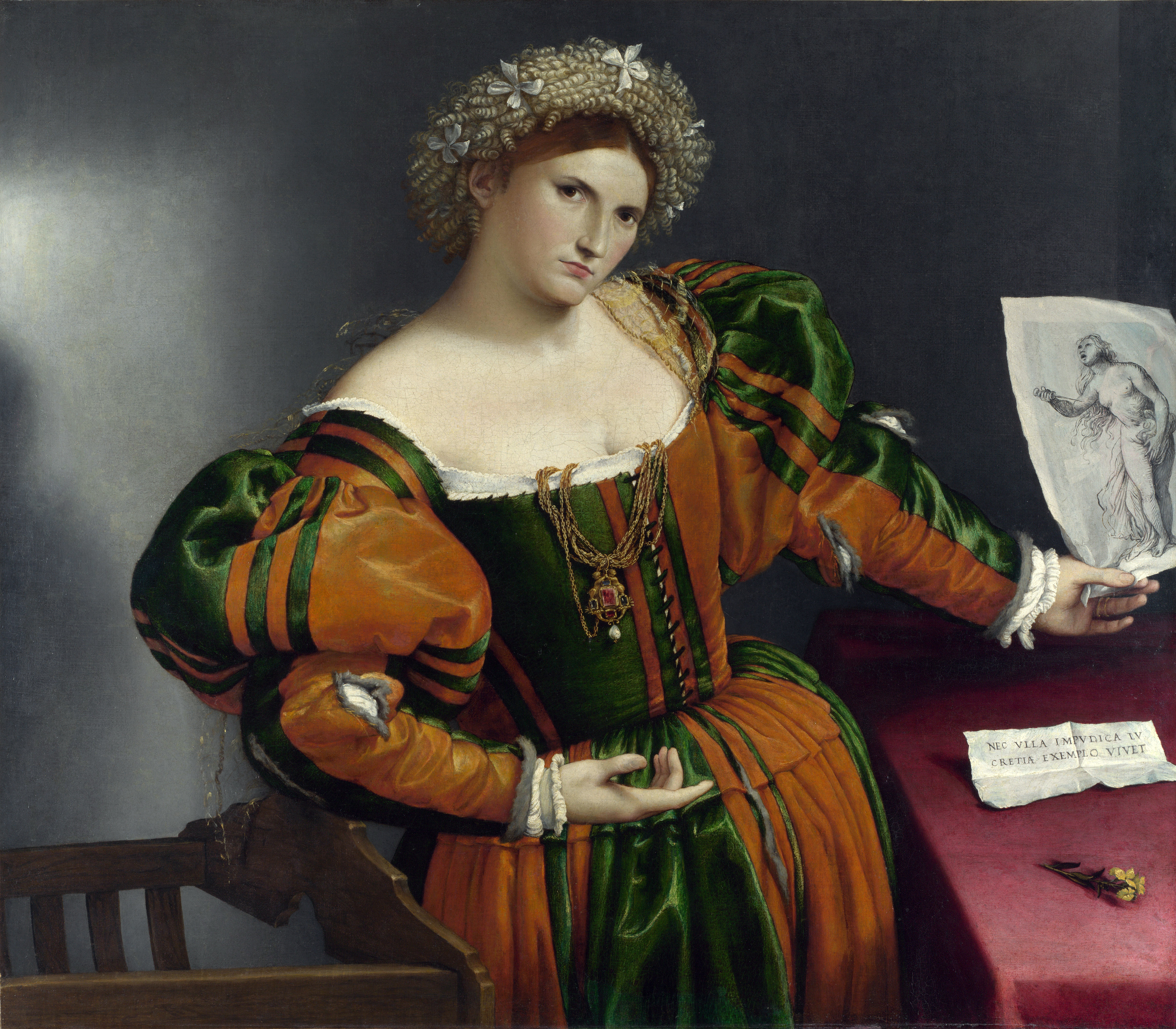
The large jewel sort of stuffed into the front of Lucretia's dress is rather intriguing. It has pinky/red gems and blue ones with a drop pearl. It has foliage and figures and the center is a giant flower. All kinds of interesting stuff going on. Wikipedia's zoom is loads better than the images at the National Gallery and allows you to see the spiky topped flower stems and the faces of the cupids/putti.
While I would like to make a reproduction of the portrait jewel (in Sculpy since that's as close as I'm going to get to gold) I'm not so sure about my ability to sculpt it. I started on it and the proportions were not very good. I was having a tough time with the total 3 dimensionality of the putti. The entire piece also didn't seem particularly stable. And then my son tried to eat it and I gave up once I wrestled it away from him. I figured I'd start with something a little easier after that. I found this simple pendant dated 1540-1560 at the V and A (museum number M.242-1975) It is that simple because it is more concerned with the efficacy of the stones and their value as talismans, but I love the lines of it. I bulked it up a bit, both because of my sculpting ability as well as needing something more monumental.
Here it is before it hit the oven. You'll notice the green and red stones, which is what I wanted (mostly. At least as far as the confines of what acrylic stones I had to hand.) I sculpted it, pulled the stones out so they wouldn't melt and put it in the toaster oven. Then my children once again intervened. They ran off with the acrylic. I have no idea where. I had given them their own sparkly stones for "treasure" but that was apparently not sufficient. After several hours of looking I gave up and went back to the bag to see if there were other options. The only ones in the right sizes were blue and pink. I'm not against the blue, but I hate the pink. I think it makes it feel like its something you'd find in package with a tiara and plastic high heeled sandals in the kid's dress up aisle. Also, just to add to frustration, I thought I'd accounted for shrinkage, but not enough. I broke a bit of the setting on the bottom stone getting it in to place. Even after sanding it down it didn't go in smoothly. So I added the pearls to disguise the fix. Then I added some more so it wouldn't look like they'd been tacked on in the end. Every place where I had had little gold balls I removed them and replaced with pearls. Not sure I care for the effect. To make things not so visibly Sculpy, I used liquid gold leaf and then buffed it with a wax gold finish to try to pick up some of the detail. Loads of gold chain and a clasp finish it out.
As I said, learning experience. I thought the acrylic would look fine since they are table cut. The color is a huge issue, however. Some colors look fine and others do not. While the blue and pink is actually pretty close to those in the original jewel, using a semiprecious stone of some kind might be a better option, especially to counterbalance the fact that I'm using a polymer clay. Another few attempts at sculpting is going to improve things over all, and I might get crazy and try the figures in the portrait. I think a bad looking attempt at the portrait necklace is going to make me feel better than a marginally better attempt at something that is already a compromise.
So, making my own sculpted medallions/pendants is going to go in to the pile where comb making is. I'll try again another time. Its something that I certainly want to figure out at some point.
The large jewel sort of stuffed into the front of Lucretia's dress is rather intriguing. It has pinky/red gems and blue ones with a drop pearl. It has foliage and figures and the center is a giant flower. All kinds of interesting stuff going on. Wikipedia's zoom is loads better than the images at the National Gallery and allows you to see the spiky topped flower stems and the faces of the cupids/putti.
While I would like to make a reproduction of the portrait jewel (in Sculpy since that's as close as I'm going to get to gold) I'm not so sure about my ability to sculpt it. I started on it and the proportions were not very good. I was having a tough time with the total 3 dimensionality of the putti. The entire piece also didn't seem particularly stable. And then my son tried to eat it and I gave up once I wrestled it away from him. I figured I'd start with something a little easier after that. I found this simple pendant dated 1540-1560 at the V and A (museum number M.242-1975) It is that simple because it is more concerned with the efficacy of the stones and their value as talismans, but I love the lines of it. I bulked it up a bit, both because of my sculpting ability as well as needing something more monumental.
Here it is before it hit the oven. You'll notice the green and red stones, which is what I wanted (mostly. At least as far as the confines of what acrylic stones I had to hand.) I sculpted it, pulled the stones out so they wouldn't melt and put it in the toaster oven. Then my children once again intervened. They ran off with the acrylic. I have no idea where. I had given them their own sparkly stones for "treasure" but that was apparently not sufficient. After several hours of looking I gave up and went back to the bag to see if there were other options. The only ones in the right sizes were blue and pink. I'm not against the blue, but I hate the pink. I think it makes it feel like its something you'd find in package with a tiara and plastic high heeled sandals in the kid's dress up aisle. Also, just to add to frustration, I thought I'd accounted for shrinkage, but not enough. I broke a bit of the setting on the bottom stone getting it in to place. Even after sanding it down it didn't go in smoothly. So I added the pearls to disguise the fix. Then I added some more so it wouldn't look like they'd been tacked on in the end. Every place where I had had little gold balls I removed them and replaced with pearls. Not sure I care for the effect. To make things not so visibly Sculpy, I used liquid gold leaf and then buffed it with a wax gold finish to try to pick up some of the detail. Loads of gold chain and a clasp finish it out.
As I said, learning experience. I thought the acrylic would look fine since they are table cut. The color is a huge issue, however. Some colors look fine and others do not. While the blue and pink is actually pretty close to those in the original jewel, using a semiprecious stone of some kind might be a better option, especially to counterbalance the fact that I'm using a polymer clay. Another few attempts at sculpting is going to improve things over all, and I might get crazy and try the figures in the portrait. I think a bad looking attempt at the portrait necklace is going to make me feel better than a marginally better attempt at something that is already a compromise.
So, making my own sculpted medallions/pendants is going to go in to the pile where comb making is. I'll try again another time. Its something that I certainly want to figure out at some point.
Monday, December 5, 2011
Working on garters
I spent the weekend on the road where I determined that my garters are the perfect travel project. Since they're a repeating counted pattern all I needed was needle, silk, and the garters which all were easily shoved into my pocket. If I had daintier legs they'd be done, but I am rather close to finishing the first one. Just have to do the return journey on one section and attach the buckle. I'm working on a prefinished aida cloth trim that I bought at the thrift store. I got an entire roll (about 100 yards. . .) for $2. I'm pretty thrilled at having come up with some way to use it. Its ten squares wide so it limited the patterns I could use, but one of the first places I ever encountered blackwork, The Reader's Digest Complete Guide to Needlework had a repeating heart motif that I've always loved. While that's not exactly an historical source, it is very similar to this pattern from Nicholas Bassee's New Modelbuch of 1568.
The chart is one of Claudette Ziemann's. It used to be available for free in "The Bronwyn's Blackwork Library" but has been taken down. You can still find it via The Internet Archive. The difference between the historic one and the modern is the stair stepping rather than the use of diagonal lines for the sides of the hearts. Leslie Wilkins has a fill pattern very similar to the Reader's Digest one in her Beginner's Guide to Blackwork pictured on one of the band samplers, but it is not charted. Rosemary Drysdale has a chart for the smoothed out heart border identical to the Reader's Digest one in The Art of Blackwork Embroidery.
I started with the hearts and made a few adjustments. I modified the cross in the heart by adding more diagonal lines and turned the cross into something closer to my fleur/krin. That was about it though. This is the fastest pattern I've ever done since its totally straight journey, no trips off the line.
I'm planning to put a buckle on one side and did a bit of fringe on the other end. I left it long enough so it can loop around and hang down. I don't have any documentation for this form of garters, but the last time I went looking at extant examples they were so wide ranging in design that I don't feel that it is crazy. Sprang, woven, macrame, embroidered, knitted, plain fabric, leather. . . the only thing they have in common is that they hold up stockings.
I'm hoping to finish the other garter next weekend at Solstice Court. It's the perfect sort of project to have at an event and I have the entire day without my children to chase.
Update:
I finally found somewhere that has the fabric I used. I was looking for cotton aida cloth trim or ribbon. Apparently its called banding or just aida bands. Zweigart makes one that seems to be what I have and its available in lots of colors. Not for nearly the nothing I paid for mine, but I like it so its nice to know I can get more. There are also similar products in linen. I was thinking this sort of thing might be fun to make for largesse as either garters, bookmarks, or trim. As I said, its a fabulous travel project.
The chart is one of Claudette Ziemann's. It used to be available for free in "The Bronwyn's Blackwork Library" but has been taken down. You can still find it via The Internet Archive. The difference between the historic one and the modern is the stair stepping rather than the use of diagonal lines for the sides of the hearts. Leslie Wilkins has a fill pattern very similar to the Reader's Digest one in her Beginner's Guide to Blackwork pictured on one of the band samplers, but it is not charted. Rosemary Drysdale has a chart for the smoothed out heart border identical to the Reader's Digest one in The Art of Blackwork Embroidery.
I started with the hearts and made a few adjustments. I modified the cross in the heart by adding more diagonal lines and turned the cross into something closer to my fleur/krin. That was about it though. This is the fastest pattern I've ever done since its totally straight journey, no trips off the line.
I'm planning to put a buckle on one side and did a bit of fringe on the other end. I left it long enough so it can loop around and hang down. I don't have any documentation for this form of garters, but the last time I went looking at extant examples they were so wide ranging in design that I don't feel that it is crazy. Sprang, woven, macrame, embroidered, knitted, plain fabric, leather. . . the only thing they have in common is that they hold up stockings.
I'm hoping to finish the other garter next weekend at Solstice Court. It's the perfect sort of project to have at an event and I have the entire day without my children to chase.
Update:
I finally found somewhere that has the fabric I used. I was looking for cotton aida cloth trim or ribbon. Apparently its called banding or just aida bands. Zweigart makes one that seems to be what I have and its available in lots of colors. Not for nearly the nothing I paid for mine, but I like it so its nice to know I can get more. There are also similar products in linen. I was thinking this sort of thing might be fun to make for largesse as either garters, bookmarks, or trim. As I said, its a fabulous travel project.
Thursday, December 1, 2011
Last pearl is finally stitched on the mantellina
I've apparently been getting the word wrong. I originally ran across the article of clothing at Mistress Belphoebe's site.
From there I dug a little and found three portraits in the Realm of Venus' selection of portraits. Two are by Licino and the third by Catena, all of them in the 1520-30's. They remind me a great deal of modern fur stoles, especially the Licino ones which are squared in the front and have interestingly shaped hems.
I didn't have enough fur around to make something this full, but Davey had picked up a beautiful chocolate brown shearling hide to play with. He brought it over for me to look at and I swiped it and cut out the mantellina right then since I had the outer cut from brown velvet. The ones in the portraits might be velvet, might be fur. I really can't tell. I ran across Katherine's mantellina and her discussion of the mentions of them in Moda a Firenze Kat lists wool,taffeta,satin,and velvet with ermine lining. Red is the most popular color listed. Embroidery of gold and decorative frogs are also mentioned. As I don't have a copy of Moda (yet) I haven't done my own reading. I'm really grateful for her summary of options other than the dark and plain ones in the portraits. Not that dark fur isn't beautiful on its own, but I like playing with embellishment.
It's gone through a few design changes. There was the moment of peach flowers. Then I moved on to trying some cutwork to expose one of my favorite flaming orange silks. I designed something that I hope looks like my Krin/fleur on a heart, but isn't so detailed that it is out of style with cutwork designs.
The velvet has a bit more stretch than would have been ideal, especially with the curved shape having most of the mantellino on the bias. When I clipped the krins, it sagged out of place and refused to lay nicely. I didn't interface the velvet or treat the edges. It was a conscious choice, but I wouldn't do it that way again. In trying to come up with a solution, I decided to add some pearls to further decorate the points where I tacked the cutwork motifs in to place.
I'm mostly happy with how it ended up, but it was another of my harebrained decisions. In adding the pearls, I could not use a glover's needle that would have made it easier to put the tacks through the velvet and silk in to the leather of the shearling. I needed a small pair of needle nose pliers to pull the embroidery needle through the leather after awhile as my fingers got cramped and full of holes. I ended up bending about 7 needles in the process of putting the 351 pearls in place. It's not that many pearls, but it certainly seemed like more.
Originally, I had a collar on this, but the curve of the mantle was sitting too far up on my neck once I finished it. I took it off and re-cut the back neckline. I was going to add the collar back on, but decided to keep it closer to the portrait shapes. The largest reason for this is the general lack of collars in the 1530's dresses/partlets/etc. After spending some significant time looking at partlet styles over the last couple of days, a collarless mantle seemed more correct. It is also more in keeping with Katherine's mention of the wearing of mantellinas under other coats for additional warmth. With the oversized baragoni of the dress, trying to stuff more under the zimmara didn't seem like much fun or at all comfortable.
I'd toyed with some gold frogs or edging the mantel in a gold lace, or maybe putting a flat gold braid on the inside of the cutwork, outlining a border. I'm afraid it would further downplay the cutwork and the contrast from the orange. I'm open to suggestions, however, and to be contradicted since I want this to pop and look as finished as it can, especially after all the time spent on it so far. In the meantime, I added a subtle antiqued bronze clasp I've had in stash for a couple of years. It has vaguely heart shapes in the filigree and the color blends nicely in to the velvet. I'm declaring victory and moving on.
From there I dug a little and found three portraits in the Realm of Venus' selection of portraits. Two are by Licino and the third by Catena, all of them in the 1520-30's. They remind me a great deal of modern fur stoles, especially the Licino ones which are squared in the front and have interestingly shaped hems.
I didn't have enough fur around to make something this full, but Davey had picked up a beautiful chocolate brown shearling hide to play with. He brought it over for me to look at and I swiped it and cut out the mantellina right then since I had the outer cut from brown velvet. The ones in the portraits might be velvet, might be fur. I really can't tell. I ran across Katherine's mantellina and her discussion of the mentions of them in Moda a Firenze Kat lists wool,taffeta,satin,and velvet with ermine lining. Red is the most popular color listed. Embroidery of gold and decorative frogs are also mentioned. As I don't have a copy of Moda (yet) I haven't done my own reading. I'm really grateful for her summary of options other than the dark and plain ones in the portraits. Not that dark fur isn't beautiful on its own, but I like playing with embellishment.
It's gone through a few design changes. There was the moment of peach flowers. Then I moved on to trying some cutwork to expose one of my favorite flaming orange silks. I designed something that I hope looks like my Krin/fleur on a heart, but isn't so detailed that it is out of style with cutwork designs.
The velvet has a bit more stretch than would have been ideal, especially with the curved shape having most of the mantellino on the bias. When I clipped the krins, it sagged out of place and refused to lay nicely. I didn't interface the velvet or treat the edges. It was a conscious choice, but I wouldn't do it that way again. In trying to come up with a solution, I decided to add some pearls to further decorate the points where I tacked the cutwork motifs in to place.
I'm mostly happy with how it ended up, but it was another of my harebrained decisions. In adding the pearls, I could not use a glover's needle that would have made it easier to put the tacks through the velvet and silk in to the leather of the shearling. I needed a small pair of needle nose pliers to pull the embroidery needle through the leather after awhile as my fingers got cramped and full of holes. I ended up bending about 7 needles in the process of putting the 351 pearls in place. It's not that many pearls, but it certainly seemed like more.
Originally, I had a collar on this, but the curve of the mantle was sitting too far up on my neck once I finished it. I took it off and re-cut the back neckline. I was going to add the collar back on, but decided to keep it closer to the portrait shapes. The largest reason for this is the general lack of collars in the 1530's dresses/partlets/etc. After spending some significant time looking at partlet styles over the last couple of days, a collarless mantle seemed more correct. It is also more in keeping with Katherine's mention of the wearing of mantellinas under other coats for additional warmth. With the oversized baragoni of the dress, trying to stuff more under the zimmara didn't seem like much fun or at all comfortable.
I'd toyed with some gold frogs or edging the mantel in a gold lace, or maybe putting a flat gold braid on the inside of the cutwork, outlining a border. I'm afraid it would further downplay the cutwork and the contrast from the orange. I'm open to suggestions, however, and to be contradicted since I want this to pop and look as finished as it can, especially after all the time spent on it so far. In the meantime, I added a subtle antiqued bronze clasp I've had in stash for a couple of years. It has vaguely heart shapes in the filigree and the color blends nicely in to the velvet. I'm declaring victory and moving on.
Subscribe to:
Posts (Atom)